Why Use an Online Flipbook?
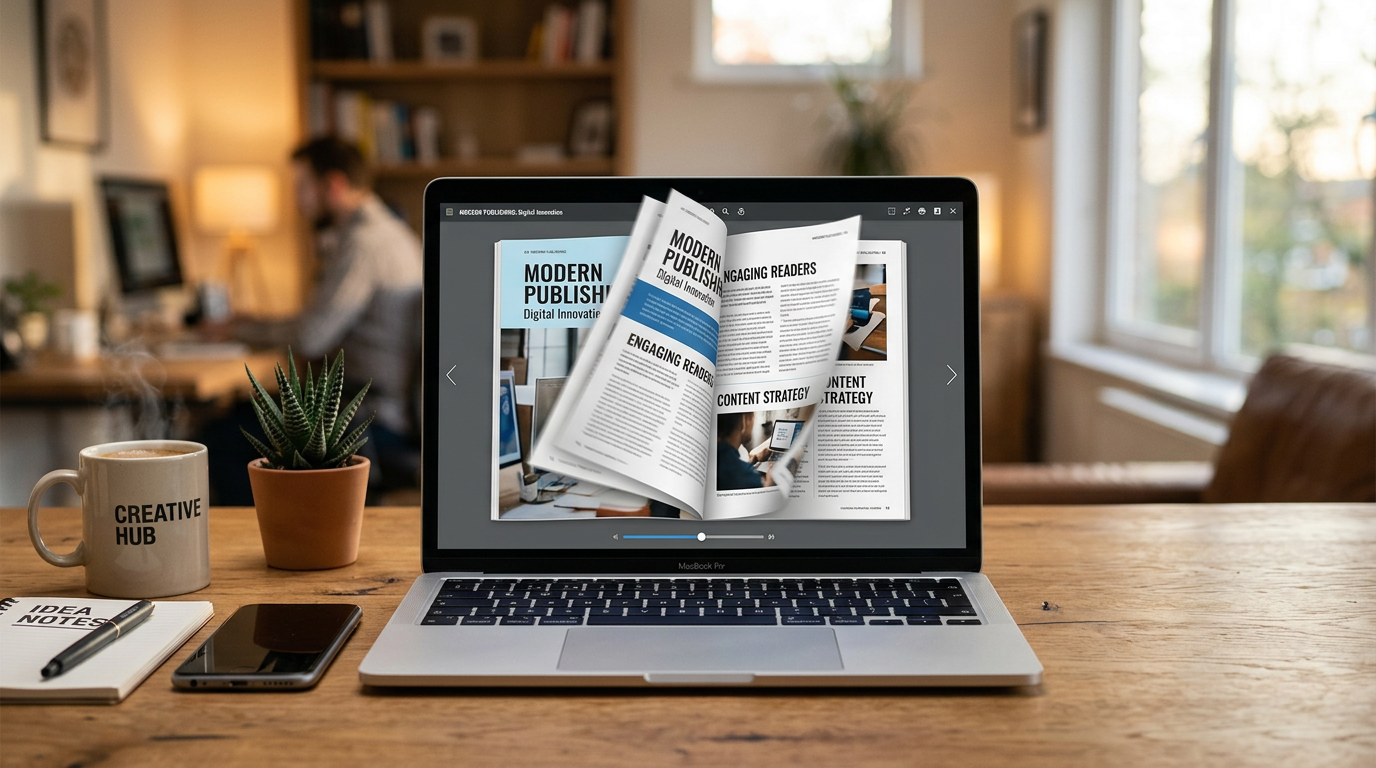
You spend hours crafting a brochure, catalog, or report. You export it as a PDF. You email it out, upload it to your website, maybe even post it on social media. Then… nothing. No engagement, no feedback, no way to know if anyone even opened it past the cover page.
This is the reality for most static digital documents. They sit in inboxes and download folders, unopened or skimmed at best. Online flipbooks solve this problem by turning flat files into interactive, web-native publications that people actually want to read.
The Problem with Static Content
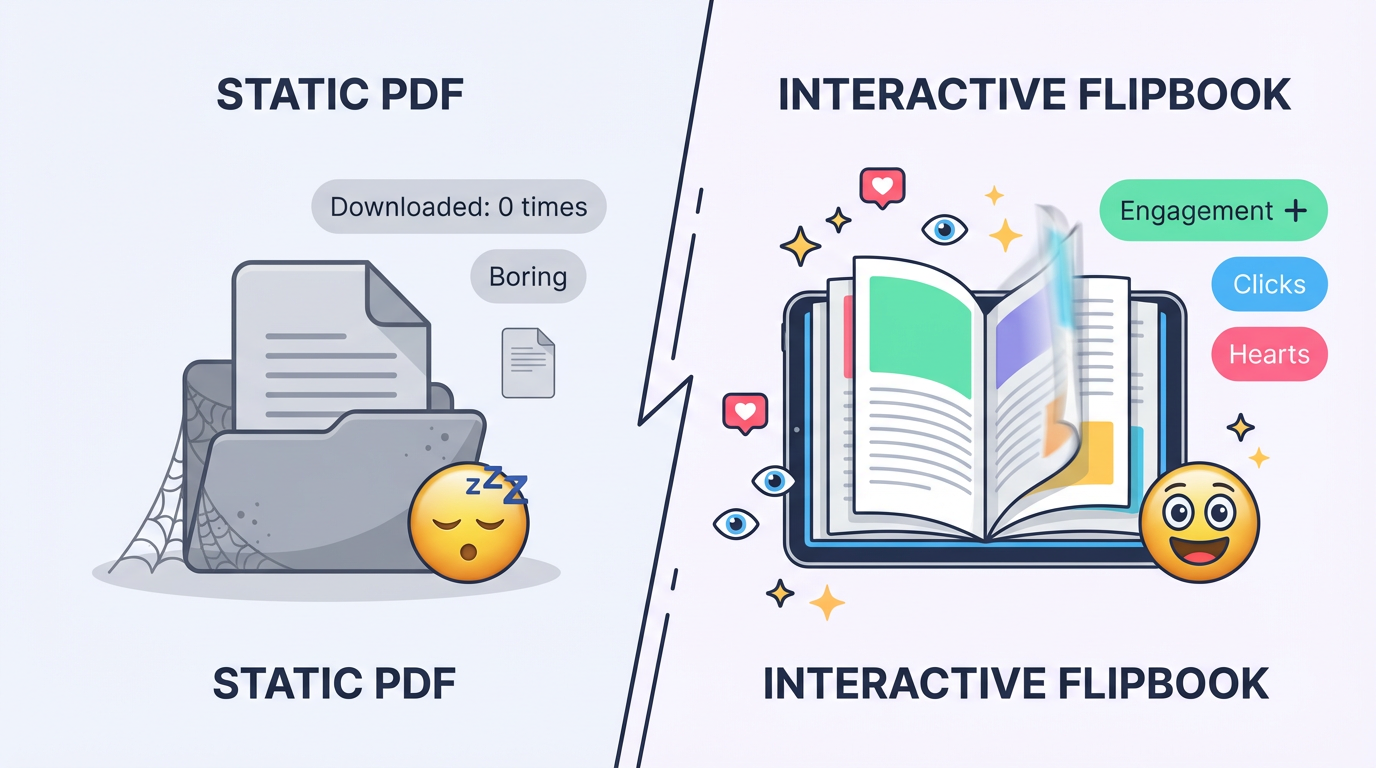
PDFs were designed in the early 1990s to replicate printed pages on screen. They do that job well — but the web has moved on. Today, over 60% of all web traffic comes from mobile devices, and readers expect content that adapts to their screen, loads instantly, and responds to interaction. PDFs deliver none of that.
On a phone, a PDF means pinching, zooming, and scrolling sideways just to read a single paragraph. There are no clickable navigation elements, no embedded media, and no way to search within the document without downloading it first. For the reader, it’s a frustrating experience. For the publisher, it’s a missed opportunity.
Worse, PDFs are a black box. Once you send one out, you have no idea what happens next. Did the recipient open it? Did they read past page two? Did they click the link on page five? You’ll never know. And if you spot a typo or need to update a price, you have to re-export the file and redistribute it to everyone who already has the old version.
What Is an Online Flipbook?
An online flipbook is an HTML5-based publication that displays your content with a realistic page-turning effect, right in the browser. No plugins, no downloads, no special apps. Readers simply click a link and start flipping through your pages on any device — desktop, tablet, or phone.
Under the hood, a flipbook converts your PDF into optimized web content. The result looks and feels like a real publication, with pages that turn naturally via click or swipe, but with all the advantages of a modern web experience: responsive layout, fast loading, full-text search, and support for interactive elements like links, video, and forms.
Why Flipbooks Outperform PDFs
An Immersive Reading Experience
There’s something satisfying about turning a page. Flipbooks preserve that familiar, tactile interaction while wrapping it in a polished digital experience. Readers swipe or click to advance, just as they would with a physical magazine or catalog — no zooming, no scrolling, no fighting with the format.
This isn’t just subjective preference. Research shows that interactive content captures attention significantly more effectively than static documents, with flipbooks generating up to 80% higher engagement compared to traditional PDFs. When readers enjoy the experience, they stay longer and absorb more of your content.
Analytics You Can Act On
One of the most powerful advantages of a flipbook over a PDF is visibility into reader behavior. With a flipbook, you can track exactly how your content performs:
- Views and unique readers – Know how many people actually opened your publication.
- Time spent – See how long readers engage with your content overall and on individual pages.
- Page-level data – Identify which pages hold attention and where readers drop off.
- Link clicks – Track which calls-to-action and external links get the most traction.
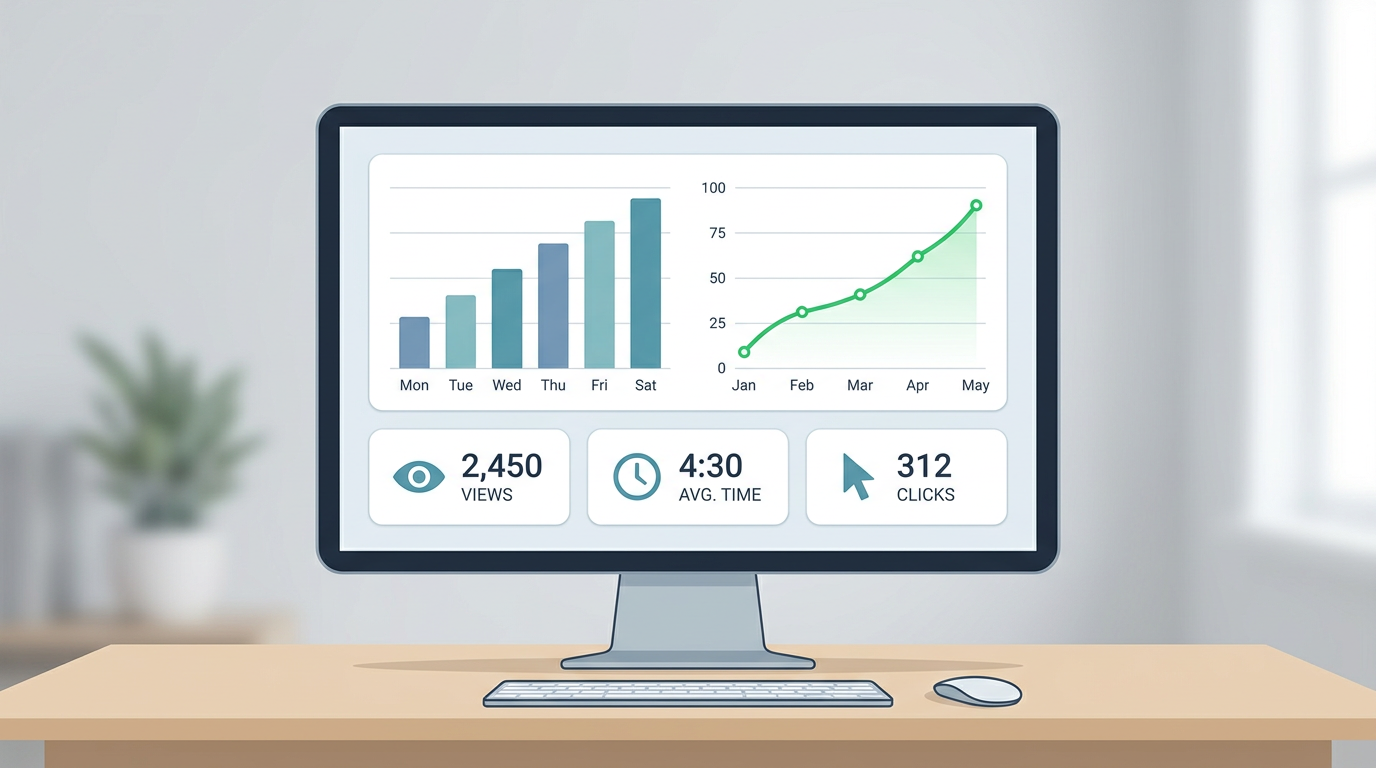
This data transforms your content from a one-way broadcast into a measurable channel. You can identify what resonates, optimize underperforming sections, and demonstrate clear ROI to stakeholders.
Search Engine Visibility
A PDF sitting on your server is essentially invisible to Google. Search engines can technically crawl PDF files, but they struggle with complex layouts, embedded fonts, and image-heavy designs. Most PDFs never rank for anything meaningful.
Flipbooks are different. Because they render as HTML, their text content is fully accessible to search engine crawlers. Your pages, headings, and body copy can be indexed and ranked just like any other web content. This means your catalog, magazine, or report can drive organic traffic to your site — turning your existing content into a long-term SEO asset.
Mobile-First by Design
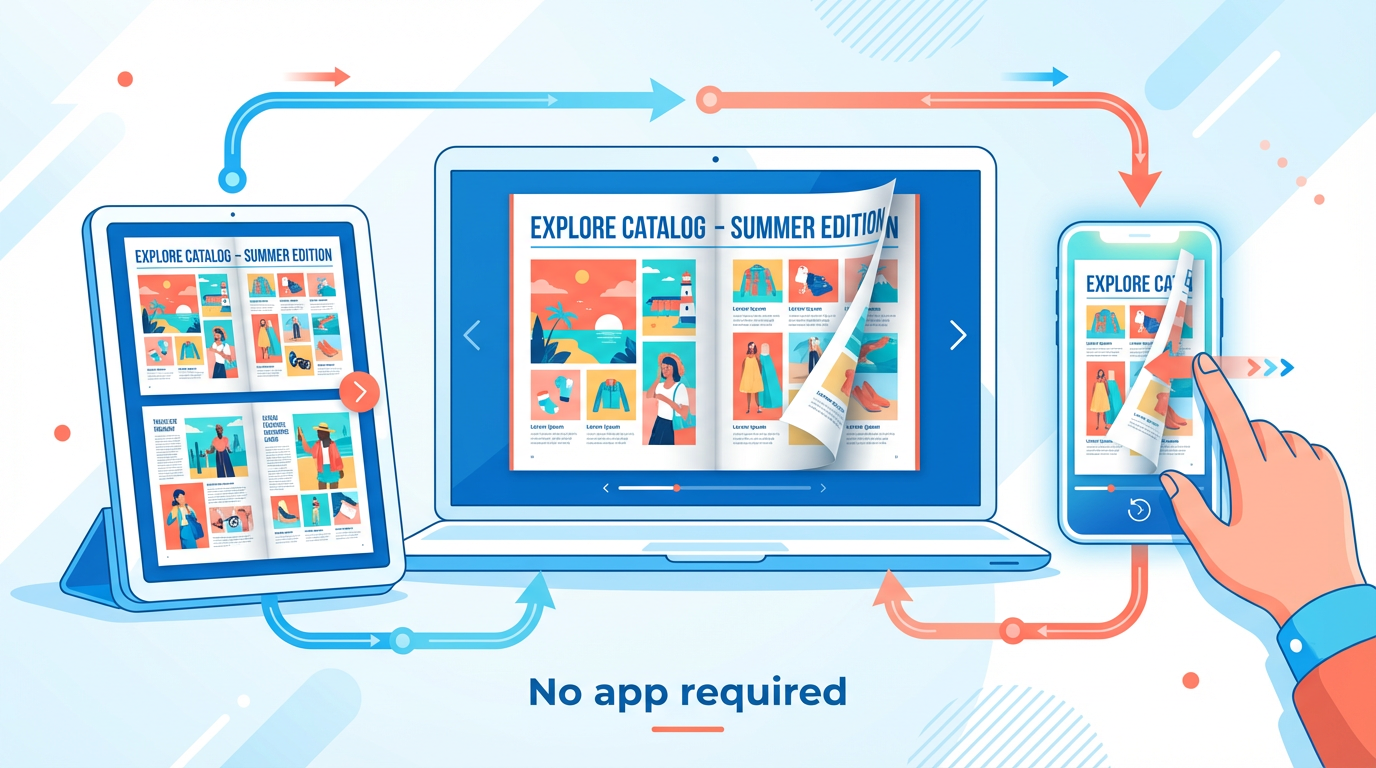
With the majority of web browsing now happening on phones, mobile readability isn’t optional — it’s the default requirement. Flipbooks are built for this reality. They automatically adapt their layout to fit any screen size, and the swipe-to-turn gesture feels completely natural on touch devices.
Readers don’t need to download anything. They tap a link, and the flipbook opens right in their mobile browser, optimized and ready to read. No app stores, no file manager, no friction.
Interactive Elements
Static documents are, by definition, static. A flipbook breaks that limitation. You can embed clickable links that take readers directly to product pages, contact forms, or related content. You can add video right on the page, so readers can watch a product demo or testimonial without leaving the publication.
This interactivity turns a passive reading experience into an active one. Instead of hoping readers will remember a URL or go search for more information later, you put the next step right at their fingertips.
Real-Time Updates
Printed materials are frozen the moment they leave the press. PDFs are frozen the moment you hit “Export.” But a flipbook is a living document. Need to update a price? Swap out a seasonal image? Fix a broken link? You make the change once, and every reader sees the updated version immediately — no redistribution, no version confusion.
For businesses that publish catalogs, price lists, or any content that changes regularly, this alone can save significant time and prevent costly errors.
Multi-Channel Distribution
A flipbook is a single asset that works everywhere. Share it as a direct link in an email. Embed it on your website or landing page. Generate a QR code for print materials, packaging, or event signage. Post it to social media. Every channel points to the same up-to-date publication.
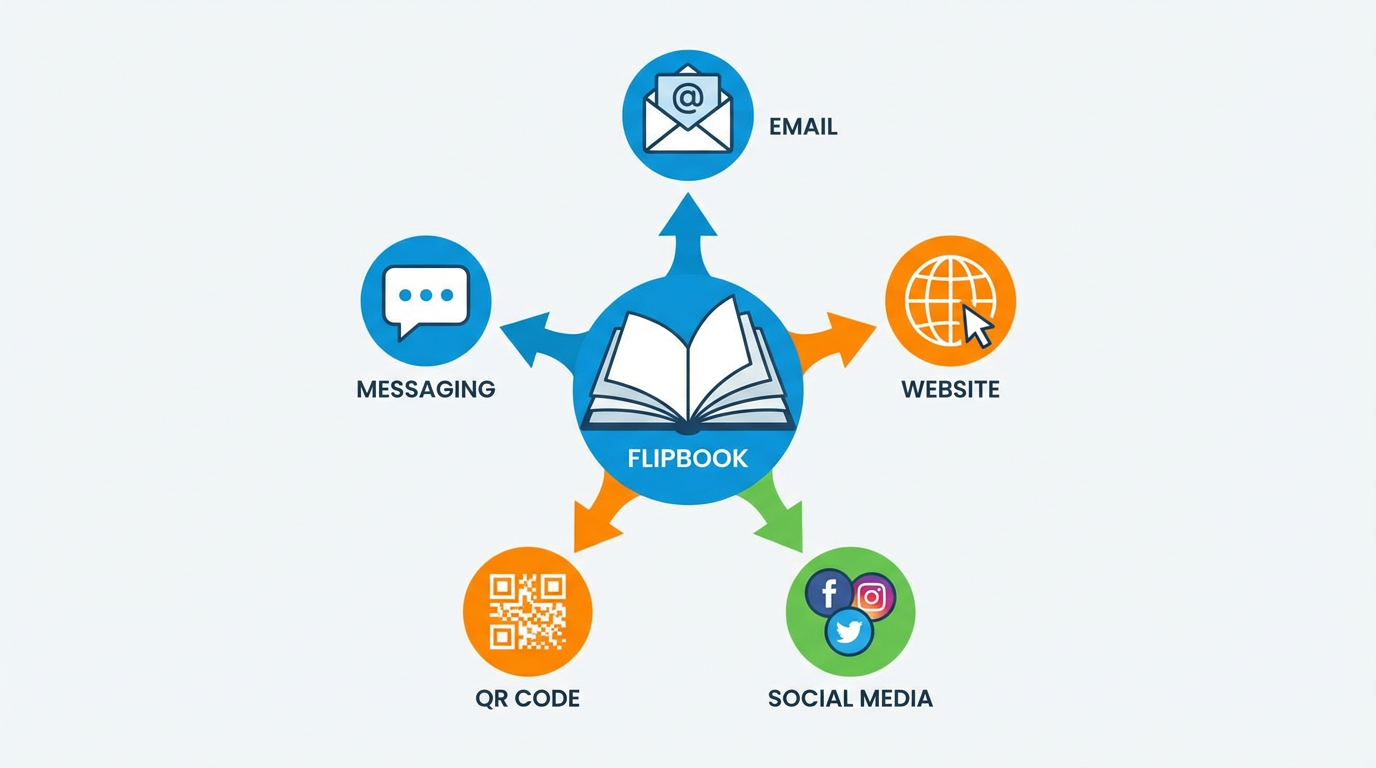
This simplifies your workflow and ensures consistency. You maintain one source of truth instead of managing multiple file versions across different platforms.
Cost Savings and Sustainability
The economics of print are punishing: design, prepress, printing, shipping, warehousing, and disposal. Every revision means reprinting. Every new recipient means additional copies. These costs add up fast, especially for catalogs and periodicals.
A flipbook eliminates nearly all of them. You convert your PDF once, and it can be viewed by an unlimited number of readers at no additional cost. There’s no paper, no ink, no shipping, and no waste.
The environmental impact is significant, too. The paper industry is responsible for roughly 12% of greenhouse gas emissions in the manufacturing sector, and at least 10% of global deforestation is linked to paper production. Every publication you move to digital is a step away from that footprint.
Who Uses Online Flipbooks?
Flipbooks are versatile enough to serve almost any industry or content type. Here are some of the most common use cases:
- Marketing teams – Product catalogs, brochures, lookbooks, and campaign materials that need to look polished and drive action.
- Publishers – Digital magazines, newsletters, and annual reports delivered to subscribers via link instead of attachment.
- Real estate – Property showcases and listing portfolios that buyers can browse on any device.
- Education – Course materials, textbooks, program guides, and training manuals accessible to students anywhere.
- Retail and e-commerce – Seasonal collections and product lookbooks with embedded links to purchase pages.
- Corporate communications – Employee handbooks, onboarding materials, and investor reports that stay current without reprinting.
The common thread is simple: any content that was designed as a multi-page document and needs to reach an audience online is a candidate for a flipbook.
Make the Switch
Static PDFs had their moment, but they no longer meet the expectations of modern readers or the needs of the businesses publishing them. Online flipbooks offer a better experience for your audience, better data for your team, and better results for your bottom line.
The best part? Getting started takes minutes, not hours. Upload your PDF, and you’ll have a fully interactive, mobile-ready flipbook you can share immediately.
Ready to see the difference? Create your flipbook now.
Featured Articles
- Uploading a Flipbook to Your Website
- Flip Book Embed Code Generator
- How to Embed Flipbook on WordPress
- Benefits of Using a Flipbook
Businesses use Instant Flipbook